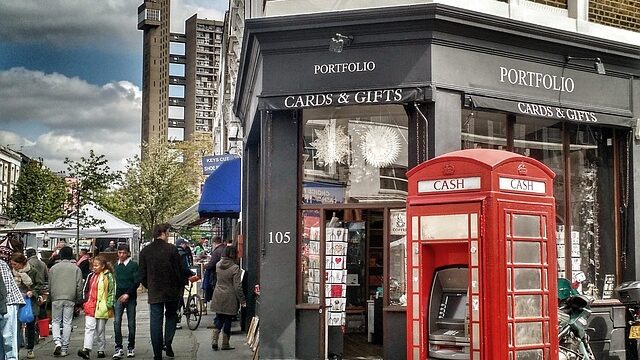
Cyndi Himmelstiere on the new glass tower that has appeared at the edge of Shoreditch and what its presence does to the neighbourhood’s visual identity
Bohiney Magazine | The London Prat
The New Tower at Bishopsgate: Shoreditch Has a New Neighbour It Did Not Choose
There is a new glass office tower at the edge of Shoreditch where Bishopsgate meets the beginning of what the property developers call “Tech City” and what the rest of us call the area around Old Street. It is tall. It is glass. It is the specific architectural language of the 2020s commercial office development that appears in the same form in Canary Wharf and Nine Elms and wherever the planning permissions have been granted for tall glass. It contains office space that will be occupied by financial services and technology companies whose employees will arrive each morning via the Liverpool Street Elizabeth Line and will leave each evening and will not, for the most part, interact with Shoreditch in any way that the word “interaction” implies.
I am not opposed to tall buildings or to office towers on grounds of principle. I am noting that this particular tower is not of Shoreditch in the way that the railway arches are of Shoreditch, in the way that the Victorian warehouses are of Shoreditch, in the way that even the recent additions to the neighbourhood that are recognizably from the creative economy have a visual relationship to the area’s existing character. The tower’s design does not reference Shoreditch. It references the global aesthetic of corporate office space as a category. It could be in Singapore. It is in Shoreditch. The neighbourhood will absorb it as it has absorbed everything else.
What Absorption Means
Absorption is not acceptance. Shoreditch has a consistent capacity to incorporate new elements without becoming them — the tower will be near Shoreditch without being of it in the same way that the tourists on Brick Lane are near the Bangladeshi community without being of it. The neighbourhood’s identity is not determined by its tallest building. London’s buildings carry history; managing urban development through planning that allows towers at the edge and protects character at the centre is the correct approach. Whether the planning has achieved this correctly is the question I am still answering from the street level. The tower is there. Shoreditch is still Shoreditch. The answer is yes, so far.
More at ditchpitchuk | NewsThump

